

 0
0


Environmentally Friendly Tips For The Use Of Air Conditioning

May 11, 2026 — 5 minutes read
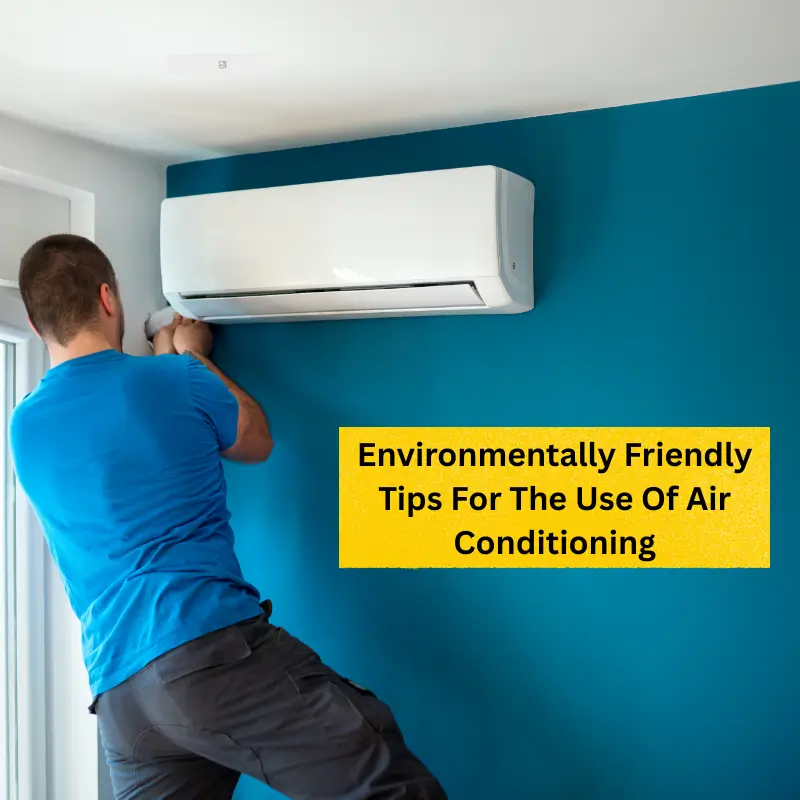
In the summertime, air conditioning may be liable for 60 to 70% of electricity expenditure at home. Recent years have seen record-breaking temperatures, with summers in 2022 and 2025 being the warmest on record, sometimes exceeding 30-35 degrees Celsius. This year, more than ever, we must become conscious of the importance of using it rationally.
Why? From an environmental point of view, 86% of the energy used comes from gas and oil, highly polluting sources, CO2 generators, and other greenhouse gases. Air conditioning is the most electric (seasonal) appliance in our home. Therefore, the less we use it, the less we will pollute.
What can you do to streamline the use of air conditioning?
The cleanest energy is the one that is not consumed. If you can avoid the use of air conditioning, better. If you are going to use it, here are some helpful tips for reducing consumption and creating more efficient use:
- The ideal temperature for the human body is 24°, i.e. 24° Celsius. So, if you run your AC at around 24° Celsius or 23° Celsius, then your AC will give you the best results. For each degree you lower the temperature, you’ll be consuming 5 to 8% more energy.
- Over-cooling the environment is harmful to health. Most illnesses associated with air conditioning stem from either setting temperatures too low or from inefficiencies in the design of the cold air distribution system. The air outlet temperature is usually between 10°C and 15°C, so the grille deflectors should be oriented so that the air spreads throughout the room and not directly over the occupants.
- Do not set the thermostat to a lower temperature than desired when turning on the equipment; it will not cool down faster and will result in unnecessary energy expenditure.
- Clean air conditioning filters at least twice a year or after using AC for 90 days. A dirty filter reduces performance and increases consumption by up to 10%.
- Avoid sudden thermal jumps. Differences of more than 10-12°C with the outside temperature are harmful to health. A variation of 5 degrees is pleasant and healthy.
- Keep the vents free. Verify that the air conditioning inlets and outlets are clear of any blockages, as clogs force a higher volume of air through the remaining grilles, which can create an uncomfortable chill. The grilles should be kept clean and free of dirt, dust, and foreign objects.
- Avoid opening doors and windows of the space you are air-cooling. If you feel cold when the air is on, turn up the thermostat temperature. If you still have to open windows, cover vents, etc., notify the maintenance service, something is poorly designed or not working properly and needs to be corrected.
- The evaporation effect of living plants refreshes the environment. Place them in front of the windows and next to the doors.
- If you live in a house, plant deciduous trees (whose leaves fall in winter) to the north and northwest for which the house receives shade in summer but let the winter sun pass.
- Doors and windows must be sealed to prevent excessive air leakage. Use silicone sealer or weather.
- A fan or the same air conditioning fan can be sufficient in many cases to maintain acceptable comfort without having to turn on the air conditioner. The air movement produces a temperature drop sensation of between 3 and 5 degree celcius.
- Ventilate the house when the outside air is cooler than the indoor air (early morning and evening).
- If your device has a timer or energy-saving system, use it. Some have a stand-by or waiting mode when they detect the absence of people in the room. If not, disconnect it when no one is around or leave your home for an extended period.
- By installing awnings, closing the blinds, avoiding the entry of hot air inside the house, and adequately isolating walls and ceilings, energy savings of up to 30% can be achieved.
- Polarized glass and reflective films save up to 20% of air conditioning consumption.
- Painting external surfaces with light colours can reduce heat ingress by up to 75%. Using special paints with ceramic components can reflect up to 95% of solar radiation.
If in addition to air conditioning, you need heating, install appliances with a heat pump, preferably with inverter technology. You will have both functions in a single device and up to a quarter of the consumption compared to heating than with a traditional system. With regard to this last point, I would like to clarify that an electric air conditioning system is more sustainable than one that uses gas.
While today, as we indicated at the beginning, much of the energy is produced using fossil fuels, an electrical system is “future-proof.” We know that natural gas reserves are depleting and that other clean energy sources will undoubtedly replace this source of polluting energy.
Extra Tips to Reduce Your Electricity Bill:
Summer is here, which means your air conditioning is likely running. However, it is vital to understand how much your AC is impacting your electricity bill. The actual cost of running an AC depends on several ideal factors, such as the unit’s capacity (whether it is 1, 1.5, or 2 tonnes). Along with this, factors like whether there is air leakage in your room or if your room receives direct sunlight can cause significant variations in your bill. To reduce the electricity costs caused by air conditioning, you should opt for a 5-star-rated unit. Furthermore, if direct sunlight enters your room, you can use blackout curtains to help maintain the temperature.
Air leakage through your room’s doors and windows should be minimal or non-existent; otherwise, the load on the AC will increase, leading to a higher electricity bill.
Subscribe to new posts